Announcements If you're new to this blog, then read our guides to the basics: Skin (Part I), Skin (Part II), The Supernatural, Color Theory I, Color Theory II, Eyes, and Brushes. Also, check out the blogsale. Contents Favored Art Tattler the glamourai The Non-Blonde Perfume Shrine Lisa Eldridge Garance Doré Smitten Kitchen Into The Gloss Grain de Musc Lacquerized Res Pulchrae Drivel About Frivol The Selfish Seamstress Killer Colours Bois de Jasmin Glossed In Translation Jak and Jil Toto Kaelo Worship at the House of Blues I Smell Therefore I Am Food Wishes The Natural Haven Messy Wands 1000 Fragrances Moving Image Source Wondegondigo The Emperor's Old Clothes M. Guerlain Colin's Beauty Pages Barney's jewelry department Parfümrien loodie loodie loodie The Straight Dope Sea of Shoes London Makeup Girl Sakecat's Scent Project Asian Models Ratzilla Cosme Smart Skincare Illustrated Obscurity A.V. Club Tom & Lorenzo: Mad Style Eiderdown Press Beauty and the Bullshit La Garçonne Flame Warriors Everyday Beauty Fashion Gone Rogue Now Smell This Dempeaux Fashionista The Cut A Fevered Dictation Nathan Branch 101 Cookbooks |
I would not give you the misapprehension, dear reader, that minimalism is intended to be a denial of consumerism, but is instead an affirmation. Truly, I am a very self-indulgent person, but it is my belief that the pursuit of beauty should also be a philosophical one, by which I mean, a combination of aesthetic analysis and common sense, for there is much in the world of commodities both to delight and disgust. Consequently, I think at the end of the month I would like to air out a freeform tally of the frivolities that consume me, as opposed to my usual strict and tidy schedule of posts. DAUBING After a judicious wait on DHC Deep Cleansing Oil ($24), I'm happy to say its promise has born out and this is has become my holy grail cleanser. I've used it long enough to get past the initial effects (it is not quite as softening and nutritive now), forget about using it and see my skin get worse, and return to find an improvement. It's extremely gentle with few ingredients, yet extremely thorough in removing makeup, and yet rinses clean without aggravating clogged pores. ![]() My hair has improved since I stopped using a sulfate-based shampoo from Avalon Organics, I'm thinking of trying out their more nutritive Olive & Grape Seed next, with some Nature's Gate Herbal Hair Conditioner and Giovanni Direct Leave-In. WATCHING READING Just for some sport, Northhanger Abbey, which is rather lighthearted, being the earliest work intended for publication, around when the novel begins to mature as a genre. The plot is propelled by the Catherine's hyperactive imagination from reading rather too many lurid novels (I've read a little Radcliffe, very melodramatic but not bad, she hasn't aged as well as Austen), which gives Austen the opportunity to mock, affirm, meditate, and amend on the practices of novel writing. These fantasies are directly juxtaposed by her experiences with Henry Tilney, who, as many have noted, plays the role of mentor-suitor, with more than a little indulgent condescension. Some people in our PC modern era object to this implicit (and sometimes explicit) misogynism, but though Austen cares deeply for her heroines and is far too shrewd a judge to be taken in by polemical claptrap, her politics are conservative. Ultimately, though it is a very pleasant froth, it is a little clumsy. The plot lacks momentum, but Austen's novels are typically character-driven (and far better for it, otherwise you depend on absurdity over depth), and the delicate, sure irony that she employs for such deft characterization is quite... broad, here. I find myself quite distracted by the disparaging asides on her heroine, it may be to emphasize a character naturally encountered rather than unnatural perfection, but it is... clumsy, as I said. But it's not a bad novel; it just feels immature. Largely it is because of how brilliant, even at this early stage, Austen is at representing conversation. One must repress an eye roll at Mrs. Allen's declaratives and the Thorpes' vain, selfish manipulations, while you begin to root for Henry and Catherine right from the get go, it is not because Austen tells you, but just because the conversation between them is so excellent. I wish I could meet a boy half so witty as Henry Tilney; unfortunately I have a tendency to outtalk them. Also read and intending to analyze later in the coming month: Madame Bovary, Jane Eyre, and North and South. LISTENING EATING ![]() SNIFFING I acquired a bottle of Frédéric Malle Une Fleur de Cassie, which oddly reminds me of Guerlain's L'Heure Bleue—a faded and shadowy alien garden, with a honey-sweet powder and soft, polished woods—somewhat updated for modern tastes but not entirely. Reactions to this can be divisive, fortunately this is breathtakingly pretty and well-behaved on me. WEARING ![]() My favorite thing to wear of late has been this Sparrow cardigan ($98) from Anthropologie. It's so soft, I've fallen asleep in it a few times and never noticed. Another great thing for an insomniac, because one tends to drop into dead sleep. WISHLIST Chanel Wallet on Chain, with mini quilting and camellia clasp, sounds horrendous but it's not Labels: anthropologie, avalon organics, chanel, charlie chaplin, consumer diaries, dhc, jane austen, jascha heifetz, muppets, nars, peter sellers, tchaikovsky 9/28/2008 [6] What a curmudgeonly book this is! I read it in high school for an independent project, dimly comprehending nothing, and when I determined to read it again for these articles, I made sure to grab the Norton Critical Edition, for as much as I abhor secondary literature, I suspected I might need the help. Nope. It's as hermetic as ever. But where Joyce is obscure by design, and I resent him for it, Faulkner seems very much to share his frustration with his reader, as he explains in an interview with Jean Stein vanden Heuvel in The Paris Review (1956):
Q: What work was that? FAULKNER: The Sound and the Fury. I wrote it five separate times trying to tell the story, to rid myself of the dream which would continue to anguish me until I did. It's a tragedy of two lost women: Caddy and her daughter... Q: How did The Sound and the Fury begin? FAULKNER: It began with a mental picture. I didn't realize at the time it was symbolical. The picture of the muddy seat of a little girl's drawers in a pear tree where she could see through a window where her grandmother's funeral was taking place and report what was happening to her brothers on the ground below... I had already begun to tell it through the eyes of an idiot child since I felt that it would be more effective as told by someone capable only of knowing what happened, but not why. I saw I had not told the story that time. I tried to tell it again, the same story through the eyes of another brother. That was still not it. I told it for the third time through the eyes of the third brother. That was still not it. I tried to gather the pieces together and fill in the gaps by making myself the spokesman. It was still not complete... I couldn't leave it alone, and I never could tell it right, though I tried hard and would like to try again, though I'd probably fail again." I don't understand The Sound and the Fury, I do not think anyone is supposed to, it is a book both incoherent and unnaturally lacking in any forward motion, only to allow the failure of these lives to surface, already fast disintegrating back into the fetid pool of the Compsons. But then the book itself announces: "it is a tale told by an idiot, full of sound and fury, signifying nothing." ![]() ![]() ...these Alexander McQueen trousers ($594), to channel Katharine Hepburn's idiosyncratic, laidback chic. There's something truly remarkable in a woman who more presence in a pair of men's pants than most women do in ball gowns, and Hepburn, along with Dietrich, helped to popularize the look. Delightfully, McQueen has updated the classic look in a star-jacquard fabric, ever so slightly tongue-in-cheek. ![]() ![]() ![]() ![]() LISTEN Such a powerful, magnificent song, sung by one who more than anyone exemplifies the American dream, a black woman no less, in these times, to rise from the most abject circumstances (a whore house!) to legendary status, and yet it was no guarantee for happiness. READ I would recommend reading The Sound and the Fury slowly, like poetry, because the prose is quite laboriously microscopic, the space of a few words can convey reams of meaning. I would not expect, however, much in the way of literary satisfaction. Labels: alexander mcqueen, billie holiday, frank capra, gucci, guerlain, hermes, jean arthur, jean-paul sartre, jimmy stewart, lanvin, most wanted, vero profumo, william faulkner 9/26/2008 [11] I come from Toronto, a part of the country that other Canadians sneer at for numerous reasons, not least of which that it's not all that cold. Being used to the mild temperatures below the 49th parallel, I have trouble adjusting when I return to the Maritime city where I attend school. Alas, not being on the ocean, this place has a fairly miserable climate: hot, humid summers, bitter winters, and every September, a frustrating season when the temperature fluctuates from about 30°F in the early morning to about 70°F in mid-afternoon. I always forget how cold it is here when I'm at home, and ask myself why I own so many sweaters. ![]() J. Crew's clothes generally don't fit me, but I do like their knits. This is my latest acquisition, a lightweight wool-blend crewneck in a beautifully dark navy ($69.50). I layer it over white button-down shirts and dark jeans, and it is warm, neat and terribly preppy in an old-fashioned way, which I find I'm into these days. (Nouveau preppy, alas, is a loathsome style, all about wearing rugby shirts or hoodies with the correct aspirational logo blazoned across the chest; when I was in high school it was Tommy Hilfiger, these days it seems to be Hollister.) ![]() ![]() It was my birthday yesterday, and I have a couple of indulgences: a light-as-air sleeveless silk blouse in a deep teal, from Véronique Miljkovitch (not pictured on her website, oddly enough), and these 1920s-inspired Savoy pumps from Remix Vintage. I love the low fluted heel, the wide strap, the lovely buttoned-up primness of them (although the era's a bit off, I think of Ginger Rogers in The Gay Divorcée, girlish and aloof, trying to maintain her composure with her dress caught in a trunk, or gleefully racing her Duesenberg through a park). One can just picture them with the wispy, flowing frocks of the era, although I will probably wear them with wide trousers or knee-length skirts; as much as I love the retro look, it can be overdone. Labels: fashion notes, j crew 9/24/2008 [3] Smell is the most subconscious of our senses. Unlike most members of the animal kingdom, we depend on sight foremost, while smell takes rather a back seat in our preoccuptions. The science behind smell is as yet uncertain, but this proves no hindrance to our appreciation, only heightening the hedonism associated with the pleasures of smell and taste. If you are content with "it smells good; it attracts others" and find yourself laughing at purple prose, then please, read no further. To an outsider, it must seem a hermetic pursuit indeed, but allowances must be made for the excesses of lyricism—the more evocative a perfume, the greater its power over us—and language has a habit of poetic distension when the subject is beyond expression (this explains, in part, why the most recurrent themes in literature are death and sex). For they are more often fantastic metaphors for experience, from a post-coital cigarette (Caron Tabac Blond) to a Hitchcock blonde (Chanel No. 19) to a steel-girt metropolis (BVLGARI Black) to a lady mourning her lost love on the shore (Jean Patou Normandie), rather than literal recreations of nature. This is perhaps why perfume is so very, very personal; our own memory, triggered by a few hundred volatile molecules, informs us of people we've known and places we've visited and things we've imagined, surfacing from the deeper regions of the psyche. Hence, The Mnemonic Sense. Our language even has a word for this phenomenon, redolent, which implies in its etymology a returning action of the mind, which "you instantly evoke, with shut eyes, on the dark innerside of your eyelids" (Nabokov, Lolita). Memory is the realm of smell; scent is a quiet but potent muse, not haughty Historia the nearsighted know-it-all who watches over the tides of humanity, but a household goddess—nostalgia, secrets, impressions. ![]() Consequently, the last thing one can expect from a perfume review is objectivity. A description of sensations is at best a nebulous project, while a list of chemicals intimates very little information to most, and besides that, tastes differ, concentrations vary, and sometimes one is simply not in the right mood. As a remedy, many perfumes are provided with "notes", but this can be misleading. The composition may claim to feature jasmine, but what one smells is very likely not real jasmine extract but the synthetic hedione (among others), and representations depend very much on what the perfumer wants to highlight, whether it's a sheer, filmy veil on Chanel Cristalle or a heady, indolic mass in Serge Lutens À La Nuit, while Annick Goutal Songes explores yet another facet of this tropical flower, the intense, candied sweetness. A rose is never just a rose in perfumery, and the multiplicity of interpretations expands exponentially with complex compositions. For example, Chanel No. 5, an iconic combination of rose and jasmine dosed with sparkling aldehydes, has been directly emulated by Jean Patou JOY, Guerlain Liu, Lanvin Arpège—but JOY seems more fresh and flowery, Liu is not so sweet but rather dry, while Arpège feels like creamy silk. But past the physical impressions, even within the gradations of compositional complexity, are dreams—mixtures compounded of memory and desire. People flock to Chanel No. 5 because Marilyn Monroe wore it, because their mother wore it, because it's a bottle of Chanel, because it makes them feel elegant and sophisticated. None of these things, I must point out, are actually real. They are associations, memories, impressions, and aspirations (respectively). That perfumes are capable of moving us to such profound ecstasies and aversions is a testament to our imaginative powers, perfumer and perfumed. A waft of Chanel No. 5 smells expensive and classic, rose-and-jasmine-and-aldehydes, soapy and sweet: these are the impressions that nearly everyone will have. Beyond that, everything else is your reaction, and yours alone. You may hate it, you may love it, the only way to know for certain is to wear it on your skin. It is a mystery why some perfumes just strike you like lightning, an explosion of divine radiance on your skin. It is hard to describe. It feels great. Like true love. Like an epiphany. Kismet. But so much vagueness leaves something to be desired, one requires points of reference to make sense of your experience:

![]() The perfumes chosen are iconic representations that are not too impossible to find, and they are all worth sniffing for reference's sake. They are as follow, from noon going clockwise: Jean Patou JOY (not so sweet as Chanel No. 5), Robert Piguet Fracas (tropical flowers with peachy notes), Thierry Mugler Angel (the gourmand that started it all), YSL Opium (überoriental), Knize Ten (classical leather), Guerlain Jicky (the iconic fougère), Guerlain Mitsouko (witty, luminous chypre), Narciso Rodriguez (fluid musks brightened with orange blossoms), Annick Goutal Eau d'Hadrien (lemon and herbs), and Chanel No. 19 (frozen green iris of the highest quality). They are representatives for the five major categories of perfumes that a completely untrained individual will recognize: florals, gourmands, orientals, dense, and fresh, with gradations to account for variety and complexity:
Labels: annick goutal, caron, chanel, frederic malle, guerlain, jean patou, knize, narciso rodriguez, ormonde jayne, robert piguet, serge lutens, the mnemonic sense, thierry mugler, vladimir nabokov, ysl 9/23/2008 [0] It may not be the best idea to post so many videos at once, at any rate you may need to refresh the page if you have the time or inclination to view them all. The twenty films I love best, though there are so many that qualify for inclusion, and even more I've yet to see. I'll update as my experience deepens, and leave the tag on the side for easy access. I've arranged them chronologically, and linked, where available, to the full movie; it's pretty cool how you can see how film-making has evolved in recent decades. Shanghai Express (1932): It's worth it just to watch Marlene Dietrich swan about looking glamorous, no one was ever as glamourous as she. The Wizard of Oz (1939): Oh, what a world! Musicals can be rather contrived, but so hugely entertaining, and Judy Garland is the queen of the genre, after all. Modern Times (1939): Plain comedic brilliance, I dare you not to laugh. It's got a great combination of crude physical humor and sophisticated social critique at the same time. Fantasia (1940): It's wonderful to see Disney in a risky, hyper-abstract venture that delights the senses, considering what menial, mind-numbing trash it has become. To Have and Have Not (1944): Hollywood churns out ersatz romantic circumstances with great regularity, but Bogey and Bacall are my favorite—real lust (that glint in their eyes! that's not acting) tempered with brilliantly edged sarcasm. Puts Bradgelina to shame. Arsenic and Old Lace (1944): A great comedic performance requires two things, a continuous deflation of expectations (which is why comedies date so rapidly in comparison to tragedies) and perfect timing. Notorious (1946): My favorite Hitchcock film, especially for the contrast between Bergman's pristine, well-scrubbed exterior and the harsh slut inside, and side by side with the slapstick comedy that precedes, you may marvel at Grant's exquisite versatility, here he plays a repressed, disapproving stoic. Plus, Claude Rains is most awesome. All About Eve (1950): The most magnificent performance, ever. If you ask me, Bette Davis was the greatest actress who ever lived, no beauty so therefore not much as a movie star, but what a consummate performer. (Anne Baxter's role is superb, too, and much more difficult, in a way.) Stalag 17 (1953): World-weary, cynical William Holden, a fantastic supporting cast, and the prolific Billy Wilder team up again (not so stilted as Sunset Boulevard, great a movie as it is), for a incisively funny take on POW-camps. This is not your average war movie. Cat On A Hot Tin Roof (1958): Sultry, in every which way. That scene when Burl Ives is reminiscing about his father one of the tenderest, heartbreaking moments in all of cinema. Some Like Hot (1959): Wilder's more frivolous side, Marilyn Monroe is just so adorable in black and white, the way her skin and smile just dazzle the camera. Lolita (1962): Based on one of my favorite novels, with a greater emphasis on performance than is usual in Kubrick films, every actor is spectacular in his or her role. Shelley Winters, in particular, is wholly underrated as an actress. Taxi Driver (1976): This film marks (though it is not the origin), for me at least, the emphasis on realism of later cinema. Travis Bickle is the ultimate anti-hero, is he not? Disturbed as he is, there is a bit of his loneliness inside all of us. Star Wars (1977, 1980, 1983): My choice for the epic genre as well as major special effects. As much as I enjoy LOTR, I think the older parts from the Star-Wars franchise are better made (not so many melodramatic slow-motion close ups) and even more engaging. Tampopo (1985): A montage of scenes, tender and sensual and cynical and funny, tied together by the common theme of food. Cinema Paradiso (1988): Unabashed sentimentality that examines the impact that films have made on our lives, through the eyes of a young man growing up in a small town in Italy. My favorite movie. Pulp Fiction (1994): My mother's favorite movie, believe it or not: ace acting, dark humor, quirky criminals, and a convoluted plot. Princess Mononoke (1997): This is not a children's movie that talks down to one, by offering simple black-and-white morality with complex characters (Lady Eboshi, for example, is the one responsible for the destruction of the forest, and yet she takes in lepers and prostitutes and gives them a second chance at life), and far before its time in pushing environmental issues. American Beauty (1999): An utterance of 90s cynicism, about such defeated people, but ultimately what an affirmation of life. Gosford Park (2001): The most amazing ensemble cast ever, leading rolers playing bit parts, combined with such real-life details—the uniqueness of every character is but only glimpsed, the patterns of their daily lives ever so thoroughly researched, and nothing like a condensed, singular plot but more a crossing of many purposes. Labels: desert island 9/21/2008 [2] I've often walked by Yves Rocher in the mall (there are actual stores in Canada; I gather this is not the case in the States), but never had any interest in going in; I'm not sure why. I think I figured it for some kind of vaguely snooty spa right up until the day I started figuring it for a French Fruits & Passion. In fact it's rather like a French cross between The Body Shop, Avon, and Bonne Bell, with constant sales and a moderately priced salon in the back. ![]() This amuses me: was there ever a makeup item more clearly intended for twelve-year-olds? LipSmackers, I suppose. This confirms for me that the innate good taste of the French is a half-truth. French good taste is fantastic, French bad taste is just...bad. (Nobody who has walked past the Moulin Rouge can be surprised by this. Yikes.) Anyway, despite what Luca Turin calls its "resolutely downmarket" image, Yves Rocher actually has a decent reputation in fine fragrance; they often use famous noses (Annick Ménardo, Sofia Grojsman), and they're said to use better ingredients than you might expect from a cheap line. I tried a few of their offerings the other week, before I ran out of arm space; I have samples of a few more, although not much to say about all of them. ![]() I'm not sure why I don't like patchouli; I should like the rich, spicy, vaguely dirty quality of it, but to me it has too many hippie associations, and my skin tends to amplify it unpleasantly. Cocoon has a patchouli drydown for patchouli-haters, very comforting and soft. Unfortunately, before I got to the drydown, I had to smell like a stale Dairy Milk bar for a couple of hours. Perhaps this is just me. A mini of this stuff sells for $4 CAD ($3 USD), and there are frequent sales, so trying it might be worthwhile if you like patchouli or gourmands. Rose Absolue (Rose Absolute over here) was composed by Christine Nagel, who also composed Lancôme's lovely but stupidly overpriced Mille et Une Roses. Rose Absolue is not quite as soft as Mille et Une Roses; it's fruity, as most rose soliflores are, and the fruitiness of the rose is amplified by an apple note that I rather like. Smelling this on my skin, I was overcome by a wave of nostalgia; the first perfume I ever owned was The Body Shop's Tea Rose, and this put me in mind of that, but also of the rose garden my father doted on when I was a child. In October, around the time the Ontario apple harvest started to come in, the last flowers would be blooming, and he would pile straw around the rosebushes to protect them from the frost. I suppose for me this is an autumn fragrance. Un Jour Se Lève (sold in North America as "A New Day Dawns" -- is the French name also a cliché?) is the EDT version of YR's Comme Une Evidence. I read on The Scented Salamander that this is one of the best-selling fragrances in France, up there with Chanel No. 5 and Angel, so I ordered some when it went on sale. It's billed as a chypre, but it doesn't smell like a chypre to me (at least not the chypres I know); it smells to me like a contemporary fresh/fruity floral, dominated by lily of the valley and an interesting rhubarb note. (If my nose is failing me and this really is a chypre, it is the chypre equivalent of a Marlborough Sauvignon Blanc: smoother, sweeter, less weird.) It's incredibly nice, though, neither cloying nor screechy, very long-lasting for an EDT, and pretty great for the price. It makes me think of a group of young mothers I saw in Paris, pushing tastefully sized strollers, dressed simply in well-fitted sweaters and neutral slacks, hair tidily pulled back: wholesomeness well done.Labels: perfume notes, yves rocher 9/19/2008 [3] ![]() This is closely related to au naturel, but the intention differs somewhat. Here the makeup is visible, but not to the point that it draws attention to itself. It is a concession to formality, like the man's tie for work, it might otherwise be called an "office face": classic, about medium in intensity for everyday versatility. It's rather like a white buttondown or black pumps, never fails to look appropriate regardless of age, gender, figure, or taste, but the variations are harder to follow, and depend far more on individual trial and error than any set of rules. THE BASICS
![]() OPTION 1 rose & chocolate A classic, no-fail pairing that performs excellently on most complexions, with any number of lip colors. OPTION 2 peach & bronze A warmer alternative, especially stunning with blue eyes. A slick of black liner adds sex appeal, but is not necessary. Spiced berry-brown lips pairs best with these eyes. OPTION 3 pewter & navy Cool it down with grey, which pairs excellently with navy liner. Wine-stained lips, or a softer mauve, provides the perfect complement. OPTION 4 olive & plum If you are rather deeper complexioned, more color may be required, such a gilt olive wash with plum liner. Labels: besame, caron, chanel, cle de peau, kevyn aucoin, l'oreal, laura mercier, lookbook, mac, make up for ever 9/19/2008 [0] If we mortals could choose the manner of our deaths, mine would be to drown in Mitsouko, so much do I adore this perfume—any time, any where, exclusively, forever, and despite this avalanche of absolutes I still would not miss any others. This reaction is by no means universal, Mitsouko is a notorious contrarian; should it express antipathy for your skin, it is nothing but an acrid dust in a spice-filled air. Even for ardent fans it remains too elusive to circumscribe within the poverty of language, pin one descriptor on it, and the very opposite quality will inevitably surface. ![]() Quiet, unfinished sublimity: Leonardo da Vinci, La Scapigliata (1508). Widely regarded as the greatest perfume, ever, by the pundits, and worn by such notorieties as Charlie Chaplin and Ingrid Bergman, Mitsouko was born when Jacques Guerlain brightened the twilit depths of Coty Chypre with the creamy-yet-unripe peachy sillage of aldehyde C-14, transporting us, as if by magic, backwards an hour to the moment of sunset, for the moment safe from the demons that lurk at midnight. Nevertheless, in spite of all its historical grandeur, the first sniff may surprise you: there are no great discoveries, but instead a musty, muffled gesture to traditional aromatics, a succession of deflated expectations. Bitter, bright bergamot and bitter, dark oakmoss clearly bracket each end of Mitsouko like a set of quotation marks, but the text within is obscure, full of twists, and fraught with contradictions. In Mitsouko we find only bruised orange-blossom petals and the stunted rose, sick with the invisible worm. The famous peaches-'n'-cream centerpiece (C14 and vanilla), especially in this gourmand age, is far from the sun-ripened succulence of a perfect peach; instead, we find only winter fruit, hard and unappetizing under the supermarket's fluorescence (bergamot and mandarin), before skipping ahead to the leatheriness (vetiver, oakmoss, and sandalwood, and just a hint of patchouli) of dried fruit in the drydown. Its savors are accented with spices (clove, cinnamon, and nutmeg), but more pale than punchy. Holistically, in atmosphere and aroma, Mitsouko most closely resembles an old library—all dust and aged leather and the quietness of paper. These are not exactly the olfactory evolutions to inspire confidence, and yet (for me at least) no perfume attains the sublime better, akin to that unbearable ache of sweetness that clings to the back of your throat when Milstein plays Bach. Though it strives for the seamless virtuosity of many of the classical icons, the greater part of the wonder is, O, how strange, how very strange is Mitsouko.I wish to impress upon you, dear reader, a quality of solipsism to this particular perfume; it stands apart, more than it stands above. Other perfumes are aspirational, articulating glamours* to cloak the humble and mundane, by their very nature a kind of display. This is not to diminish their achievements; indeed it is nothing short of extraordinary how a bottle of perfume can transport us so vividly into such diverse avatarism—so what if it be illusory? But Mitsouko is not like this, it is not a sociable perfume, instead it personifies the eccentricity and reserve of a profound intelligence, a genuine introvert, completely caught up in an inner life that consumes all regard it might otherwise extend for social niceties, ultimately more interesting than attractive. It is a type not often seen, and therefore poorly understood, consequently Mitsouko proves an enigma, even though perfumes are generally a subject quite humid with poetry. It is a harmony of near contrasts—luminous yet mysterious, austere yet sensuous, opulent yet subtle, witty yet tranquil, elegant yet weird—which explains in part why it is so difficult to describe. Mitsouko is anti-perfume, an abstracted meditation on the art form itself, perpetually on the cusp of uttering something meaningful, but it ultimately shies away from proposing any conclusions that might provide an easy handle for easy understanding. And yet, to intimate upon the enigma is insufficient; it seems to imply that peculiarity alone is responsible for its metamorphic brilliance. Because, believe it or not, Mitsouko is a skin scent—though rarefied, ambrosial flesh to be sure. The abstraction of form and its semantic enigmas encourage such a degree of impersonality in the perfume itself, that it becomes entirely personal to the wearer, not unlike the fashions of Martin Margiela, as opposed to the overt branding of Chanel. In all superficial respects Mitsouko is a failure: it fails to be pretty, it fails to be easy, and it even fails to be pleasant, but it does insist on a rapport, and ultimately, it becomes a conversation that only intensifies in intrigue and depth, until you entirely forget the initial disappointments, and discover that it was warm and radiant and alive all along.
Said then the lost Archangel, "this the seat That we must change for heav'n, this mournful gloom For that celestial light? Be it so, since he Who now is sovran can dispose and bid What shall be right: farthest from him is best Whom reason hath equaled, force hath made supreme Above his equals. Farwell happy fields Where joy for ever dwells: hail horrours, hail Infernal world, and thou profoundest hell Receive thy new possessor: one who brings A mind not to be changed by place or time. The mind is its own place, and in itself Can make a heav'n of hell, a hell of heav'n." –Book I, lines 242-255.
Their place of rest, and Providence their guide: They hand in hand with wand'ring steps and slow, Through Eden took their solitary way. –Book XII, lines 646-629. * In the Gaelic, "glamour" would have close associations with the occult, a witch's spell that covers the real form with the illusion of beauty (or vice versa). It is a word closely related to "grammar", eerily pertinent to our discussion of how the forms of art may can obscure the forms of substance, which I find to be the aesthetics behind both Mitsouko and Paradise Lost. OTHER REVIEWS Sakecat Chandler Burr Ayala SmellyBlog Now Smell This Glass Petal Smoke I Smell Therefore I Am Bois de Jasmin The Scented Salamander Pink Manhattan Perfume Posse Scentzilla Basenotes Makeupalley Labels: bach, chypre, greta garbo, guerlain, jacques guerlain, john milton, leonardo da vinci, martin margiela, nathan milstein, perfume notes, william blake 9/17/2008 [2] The August issue of Vogue featured a rare interview with Kate Moss, who is widely regarded as the most stylish woman alive today. Whether or not you agree with this title (I'm a little dubious myself) is beside the point: she has single-handedly sparked more trends than all of Hollywood combined. Skinny jeans, Birkins worn casually like gym bags, perfectly mussed up hair, vintage leopard-skin jackets, mixing high with low—it's all Kate. Though the issue was about examining style secrets, Moss had rather little to say about her own. She remarked that she makes sure not to look sloppy when she leaves her house (no sweats), and instead relies on a standard outfit of jeans, sunglasses, and a jacket. Though there is nothing that remarkable about seeing a celebrity in jeans and sunglasses (indeed, that is the standard LA outfit), I found her reliance on the jacket quite remarkable. A jacket doesn't have to look like the staid upper half of a suit, bridged by a conventionally frilly blouse. In fact, my favorite way to wear a jacket is with a tee, either plain or printed, because those extremes of casual and dressed-up balance each other out. Though I'd never wear skinny jeans and leopard, I must give Ms. Moss her due, it's brilliant. When you're lounging comfortably at home in jeans and a t-shirt but must run out for a carton of milk, it's so simple to throw on a jacket and look polished. It's as easy as my usual strategy for quick dressing—a great dress—only you can wear flats. Here are three examples of outfits that hinge on a pivotal jacket: ![]()
![]() Labels: chanel, fashion notes, kate moss, vogue 9/16/2008 [0] I still do not have Internet access in my apartment -- this being a student town in September, everyone is setting up services at the same time, and there are huge lineups. At present, I am taking advantage of the free wireless in a chain coffee shop and contemplating my Ferragamos. ![]() I bought mine in a vintage store for $45; they don't look quite like these, being patent leather, but close enough. I hesitated to buy them, thinking I wouldn't ever wear something so sensible, so very seventies dress-for-success (the Vara pump first came out in 1978) and borderline dowdy. It turns out I wear them all the time. They make me feel like a WASP matriarch (more specifically, they make me feel like my grandmother), but I find I don't mind. They are very comfortable for what they are, and although I do think they'd look a bit dowdy with skirts, they go with almost any pair of trousers (and I wear trousers most of the time). I frequently wear them with my less ratty pairs of jeans because the contrast amuses me. Salvatore Ferragamo produces shoes in a huge number of widths; if you have narrow feet (size A or narrower) and don't object to buying shoes without trying them on first, you can get them for a song on eBay. Labels: fashion notes, salvatore ferragamo 9/14/2008 [2] I strive always to improve my writing in all respects, so Most Wanted, which in itself grew out of a series called "Fantasy Web Find of the Day", has evolved, at least for the space of the next eight, into thematic arrangements inspired by the decades of the Twentieth Century. I intend to choose what I personally consider to be the most emblematic novel of the decade, if not the greatest, which I hope to justify with a longer introduction than usual. We will begin, not with the 1900s or 1910s, which belong more to the previous century, but the Roaring Twenties, the decade that saw the birth of jazz and Hollywood. An outcry—or perhaps nothing more than a refrain—may be heard to stifles throughout artistic circles, a desolation in which everything worth saying has already been said. If the limits of human experience are finite, and they certainly seem to be, given that technology is merely a proliferation of conveniences rather an indication of progress in the human character, then the natural conclusion may be that the limits of human expression are also finite. This is the despair that colors the basic attitude of the Modernists, who set the timbre of literary achievement for the Twentieth Century. In contempt of the self-satisfied paternalistic world view of the Victorians, the Modernists shunned melodrama for stream-of-consciousness, sentiment for cynicism. People are apt to laugh at the "importance of literature", especially in anti-intellectual America, and yet their own cynicism is nothing more than a byproduct of the Modernists' own cynicism. Though it is nothing new for aesthetics to define originality by reacting against the aesthetics that came before, and certainly criticism is nothing new, but this particular world was reeling from the collective shock of WWI, Nietzsche, Darwin, Freud, and Marx, which toppled nearly all the Belle-Epoque values—most of all, the attitude that stability, and all its conservative views, were illusory. It is not all bleakness however, it is this very cynicism that made civil-rights activism possible in subsequent decades. So the Modernists said to themselves, ok. We will show you human nature, perhaps as every writer ever has done, but we will not allow the force of internal poetics remove us from the realities of this modern world, sordid as it is. (And anyway, Shakespeare has already covered the pure sublime.) No. Our heroes are like anyone you might meet, only fiction allows you full access to the inner workings of their consciousness, a feat normally impossible, and their own blighted hopes, hypocrisies, cowardice, and mediocrity is not only the most natural of reflections (what Stephen himself calls "the cracked lookingglass"). Fundamental virtue is the last thing on the Modernists' agenda, instead their works are littered with the imperfection of qualified points of view, qualified because human. And again, if you do not find this culturally relevant to our own latter days: look at reality television. As much as I personally detest Joyce, Ulysses is undeniably larger than life, and yet its energies are devoted, Modernist style, to the deflation of expectations. His erudition is unparalleled, but it hangs heavily on on the most insubstantial of plots—many, including Joyce, have argued that this is a deliberate gesture, in order to reveal an emptiness to modern life, but I say bullshit, this is a monument to the writer's ego. Eliot famously argued that the tradition realigns itself in the presence of a great new talent, but Joyce privately admitted that he believed the secret to canonical status was to be debated in the universities for the centuries to come. To be innovative is the critical quality of the artist, it is not enough to provide entertainment and education. This book exemplifies this attitude, and it is very modern attitude—even in perfume we are apt to say, "o, this pleases but has no innovation to it, it is too safe", as if to create something that gives pleasure to others is something to disdain! ![]() ![]() This utterly unique, wondrously ornate Lucie Campbell Ring ($10,330) is pure Art-Deco poetry in diamonds and emeralds. What a euphoric engagement ring (I'd take it), and there's such a charm to it, like you inherited it from your grandmother. ![]() ![]() ![]() Labels: besame, gauloise, james joyce, louis armstrong, louise brooks, lucie campbell, most wanted, nars, paul poiret 9/12/2008 [0] In a decade dedicated to tacky egocentrism, it's nice to listen to a song that tells you, hey, you can't control everything. This bold face was been built on a more basic canvas. Much thanks to NARS for sponsoring this Beauty Notebook. I decided to work around the shocking pink of Schiap, named after the great designer Elsa Schiaparelli (in Mary McCarthy's feminist classic The Women, the exquisitely beautiful, intimidatingly intellectual Lakey, ringleader of a bevy of Vassar graduates, wears Schiaparelli), as a punk alternative to the classic red, more 80s than 50s. These are the products used, counterclockwise from top left: ![]() ![]() ![]() Though Schiap offers plenty of excitement on its own, I've always maintained that bold lips are best balanced by a soft presence on the eyes, rather than sitting alone on stark, naked face. The Underworld Duo is absolutely perfect against Schiap: it shimmers and smolders delicately, just enough color to provide contrast but not so much it competes. MAC Powersurge Eye Kohl ($14.50) was smudged around the lashline, it doesn't show but provides a base for the powders layered over it. I used the cooled ivory pearl (Tokyo) all over as a highlight, just a delicate veil of moonshine, concentrated on the brow bone and the inner corner of the eye, and threw it on the cheek bones as well. Then Underworld, a wash of the silver, not a harsh metallic but a subdued slate glimmer, to soften the edges of the petrol blue, concentrated thickly at the lashline with a small, dense detail brush. And to finish it off, a coat of black mascara. You can see the detail of the eye below, as it does not show particularly well in the face shot: ![]() Labels: beauty notebook, nars 9/11/2008 [3] Of the labels I've filled thus far, I've avoided any of the fashion series, which speaks somewhat of my priorities, but is more indicative of my dissatisfaction with the quality of my work thus far, and my inability to afford what my eye demands. Given the pitiable leanness of my wallet (seriously), perhaps what I need to do first is dwell in the upper reaches of fantasy, where I traipse from marble to rich carpet through the ministrations of a private driver, and diamonds are as common as sand. If we disregard all practical considerations, perhaps the final goal takes on greater clarity. THE BASIC PRINCIPLES Style is essentially a controlled display of eccentricity. Much of what one is exposed to, especially in print magazines, extorts the things themselves, functioning as an oracular guide to the chaos of the collections. But, no longer—slowly but surely, the industry has been taken over by a glut of vulgar accessories, far more profitable than beautiful and wearable clothes. If you think that "commodity worship" is mere socialist claptrap, consider this appalling phenomenon: how do shoes and handbags now all have names, and cost more than a bevy of prostitutes? No! Fuck you. Though we all should dress as we see fit, I believe, with all the firmness of sincerity, that there can be no style without, if there is none within; therefore it is smarter to condense rather than expand, to buy less but buy more thoughtfully, to realize that is a difference between what we buy and what we wear. So here is my mission statement: a wardrobe so intensely minimal that it will fit in a single piece of luggage, impeccably chosen for seamless mixing and matching, yet is completely expressive. (Since they are bulky and/or fragile, let us leave shoes and dresses out of the reckoning, pack 'em separately!) SO, TO BEGIN WITH ![]() A RECKONING I am rather petite, albeit not to the point of "gamine", and certainly not tall enough to be "svelte", but I have no complaints about my body, save for the short legs that make the buying of pants quite a hassle. I am amenable to most possibilities, but none of this stuff:
TASTEFUL ADDITIONS The first thing is cut back on accessories, which can become consuming singularities. Clothes you must wear, you must ask yourself, "How does this fit into my life, my self?" Accessories, on the other hand, we can always justify outside of considerations of utility if they are beautiful enough—such as the $2000 handbag that dates after a season. It's mad fun, I'm not saying it isn't, but I think what I need to do is wean myself away from that kind of behavior. Not so much because of the vulgarity because I suspect it's a waste of time and money, just another kind of toy. Therefore, two shoes, both from (who else?) Manolo Blahnik: ![]() I must admit a shameful secret: in my heart of hearts, I loathe carrying around a handbag (so cumbersome!), so for me a glorified wallet will do: ![]() Finally, a spate of jewels, preferably Lucifer Vir Honestus' gorgeously organic rose-gold pieces: ![]() My most useful accessory would a sumptuous cashmere scarf, from Loro Piana: ![]() BOTTOMS ![]() I'll need something that can get dirty, all the same, these mint A.P.C. jeans (the only thing on this list I can actually afford) are fantastic. Normally, I loathe jeans: $150 for stretchy, too-tight pants for that I-don't-try-too-hard aesthetic? Fuck me, these are real jeans, no stretch that disappoints in a year, and comfortable enough to sleep in. Many pundits vow that A.P.C. jeans are a rite of passage, which never made much sense to me until I got a pair of my own: they're completely devoid of bullshit—which, wouldn't you agree?—is what jeans are really about. Alternatively, some dressier bottoms: perfectly slouchy trousers from Balenciaga in a stone-colored tweed for chilly days and a breezy, pleated white chiffon skirt from Yves Saint Laurent to beat summer heat. I've also a cobalt belt, something new for me, it adds a subtle punch against the colors I've chosen, and neatens up the silhouette. TOPS ![]()
LAYER ![]() DRESSES ![]() Hrm, it occurs to me that my choice of heel is perhaps too much for such florid floral-print dresses—oh well, it just goes to show, even in theoretical experiments, one will always encounter flaws! COAT ![]() DOWNTIME ![]() Labels: alexander mcqueen, anya hindmarch, apc, balenciaga, carine gilson, closet confidential, lanvin, loro piana, lucifer vir honestus, manolo blahnik, minimalism, missoni, philosophy, tocca, valextra, ysl 9/09/2008 [11] When I was in junior high, I rode a crowded, overheated city bus to school every morning. I was barely five feet tall, and being crammed into a series of business people's armpits at the beginning of every day gave me a lingering hatred for two things: solid deodorant and complex perfumes. ![]() More specifically, it made me hate Amarige. This was 1993, and Amarige was near the height of its popularity, so some of the women on the bus were probably wearing it, but to me it became a catch-all designation for department-store perfumes, the kind with multiple "notes". I would say that no matter what the notes were supposed to be, they all just smelled "like perfume" to me: a stinging blast of alcohol followed by an obnoxious spicy sweetness that resembled nothing found in nature, and nothing you would want to find in nature. ![]() I've never been an actual perfume-hater; I wore The Body Shop's Vanilla in high school (wow, that stuff was sweet) and Demeter colognes in undergrad, but I had no interest in anything but single-note and/or soapy fragrances until I started reading The Lipstick Page. I love reading about fashion history; the idea of smelling the fragrances women wore eighty or a hundred years ago was incredibly appealing. I ordered a couple of decants from The Perfumed Court: Worth's Dans La Nuit, which I liked wearing, and Guerlain's Après L'Ondée, which I did not. (I can appreciate it in the vial, and I believe it's beautiful on other women, but on me it smells of urinal cake.) Then, knowing that Dain loves Mitsouko, and Luca Turin had described it as "infinitely chic", I bought another tiny decant of the EDP, expecting to encounter another historical curiosity, or something a bit harsh and forbidding. Instead, I fell in love with it. (How boring, yet inevitable -- another Mitsouko lover!) It's been compared to a Tiffany lamp, and that's what it feels like: warm, glowing, multi-coloured, floral, fruity, spicy, but somehow more than the sum of its parts. It is amazing. It does something on me that makes me like it better -- it makes me think of that directive about pearls, to wear them frequently because they shine more brilliantly after exposure to skin oils. I have turned into one of those people I used to roll my eyes at, people who will describe perfumes in terms of colour, emotions, references to music. (I was half inclined to mock this post until I realized my immediate reaction to it had been not "what a silly idea" but "what? Elizabeth Bennet would not wear Après L'Ondée!" Got me.) I fear I am on my way to perfumista status, which is ridiculous, as almost nobody around me wears or likes perfume and I spend a lot of time in buildings where it is actually forbidden (and having seen a classmate having an actual perfume-triggered asthma attack, I am not inclined to question this). Ah well. It wouldn't be the first time I've been ridiculous. It's a weird pastime, trying to educate yourself about perfumes; you spend a lot of time skulking in department stores, spraying yourself with this and that, and then taking transit home in a cloud of scent that you rather hope no one else can smell. If your nose isn't well trained, as mine isn't, you may not be able to pick out more than a couple of notes. It's the emotional reactions I look for. I may not be able to explain exactly what Mitsouko smells like (or vintage Bandit, another scent I've fallen hard for), but I can describe the feelings it evokes, and send other people into fits of eye-rolling. This is the context for anything I write about perfume on this blog. I don't have expertise, just personal experience, preferences and enthusiasms. But I suppose that's what a lot of bloggers would say about ourselves, isn't it. Labels: givenchy, guerlain, perfume notes 9/07/2008 [0] Perfumes are creatures of time. That elegant word, "composition", is nothing more than a differentiation of evaporation rates, and in the macroscopic view of things even venerated genres become dated and old-fashioned. There is no denying that chypres have seeped out of public consciousness, and it's very, very easy to blame shifting cultural mores, especially when we seem to be suffering from a glut of mawkish, fluffy sugar smells like Aquolina. Aldehydes have borne the domination of the gourmand somewhat better, but chypres are fast becoming a dying race. I am inclined to believe that the problem lies primarily in the chypre's dependence on base notes to power its presence, unlike aldehydes and gourmand and colognes which are mostly about top notes—patience is a virtue unknown to the contemporary shopper, or so perfume companies believe. "Rhapsody in Blue" from King of Jazz (1930), a sumptuous demonstration of very early Technicolor. Personally, I find that Gershwin's magnum opus makes the perfect musical bridge into modernity, much like Coty for perfumes. If Chanel 31 Rue Cambon is difficult to review outside a historical context, Coty Chypre is nearly impossible. Probably if you have sniffed this long discontinued icon, it is largely because it is an icon, and unless you enjoy the austere, twilight character of a classic chypre (I do), this will feel dated and incomplete to you, as if you were smelling Ur-perfume, a base left gathering dust in a perfumer's laboratory. And it is a base, the ancestor to some of the very greatest, greatest perfumes, from Mitsouko to Cristalle to Miss Dior to Bandit, perfumes though markedly different from each other, all arise from the versatility of Coty's fragrant muck. What might otherwise be a loose assortment of aromatics is given order and depth—the great chypres are the most meaningful perfumes ever made—hence its mythic status is largely a reflection of our perceptions and nostalgic yearnings. The myth-making instinct sometimes overleaps the inspiration; a "green" chypre like YSL Y approximates the same effect well, while others stretch the possibilities to still more fantastical heights. I am reminded of my favorite lines in Stevens' "Sunday Morning", an acrobatic masterwork in nasals:
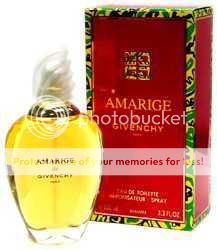
No mother suckled him, no sweet land gave Large-mannered motions to his mythy mind. He moved among us, as a muttering king, Magnificent, would move among his hinds, Until our blood, commingling, virginal, With heaven, brought such requital to desire The very hinds discerned it, in a star. OTHER REVIEWS Ayala SmellyBlog Perfume Shrine Olfactarama Nathan Branch Basenotes Makeupalley Labels: chypre, coty, george gershwin, king of jazz, marilyn monroe, perfume notes, wallace stevens 9/07/2008 [0] |
Subscribe to The Mnemonic Sense Most Wanted The Beauty Primer Lookbook Bestsellers Consumer Diaries Closet Confidential On The Label Beauty Notebook The Hit List Color Me In The Makeup Artist Wedding Bells Globe Trotter Desert Island perfume notes beauty notes fashion notes culture notes minimalism chypre arc floral arc fresh arc masculines arc gourmands & orientals arc Archives August 2008 September 2008 October 2008 November 2008 December 2008 January 2009 February 2009 March 2009 April 2009 May 2009 June 2009 July 2009 August 2009 September 2009 October 2009 November 2009 December 2009 January 2010 February 2010 March 2010 April 2010 May 2010 June 2010 August 2010 September 2010 October 2010 November 2010 December 2010 January 2011 February 2011 March 2011 April 2011 May 2011 June 2011 July 2011 August 2011 September 2011 October 2011 November 2011 December 2011 January 2012 February 2012 April 2012 May 2012 June 2012 July 2012 August 2012 September 2012 October 2012 November 2012 December 2012 January 2013 February 2013 March 2013 Images Photobucket |